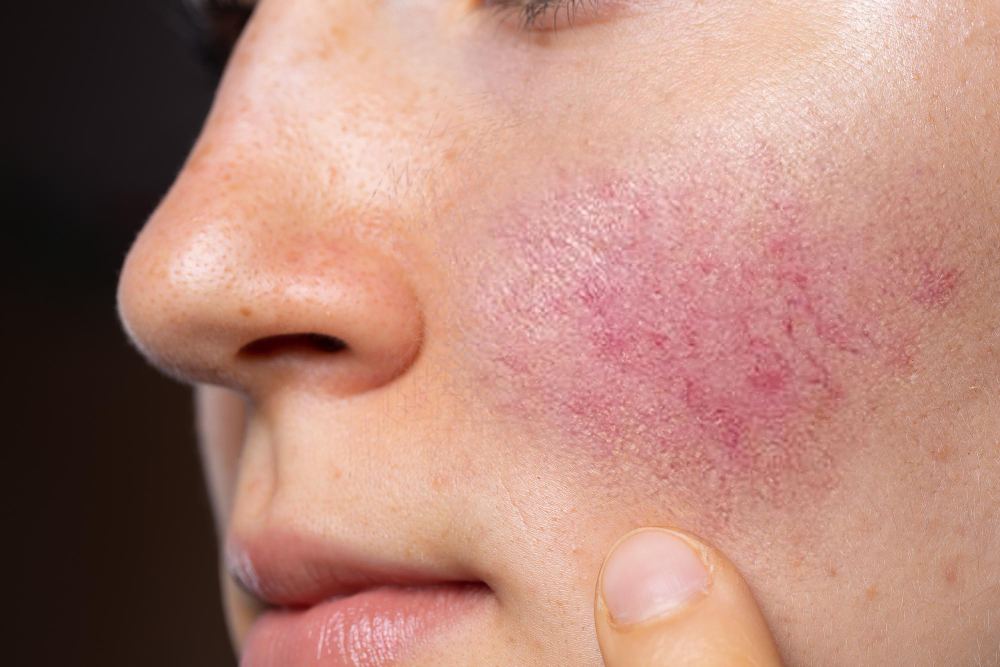
Rosacea is a chronic inflammatory skin condition that causes persistent facial redness, visible blood vessels, and in many patients, recurring inflammatory bumps and pustules. It typically affects the central face — the cheeks, nose, forehead, and chin — and tends to worsen over time without treatment. In some patients, particularly men, the nose becomes enlarged and nodular over years of untreated disease, a progression called rhinophyma.
It’s commonly mistaken for acne, adult acne, or simply ruddy skin. The misidentification matters because the treatments for acne and rosacea overlap only partially, and some acne treatments — particularly benzoyl peroxide in higher concentrations — can worsen rosacea significantly.
The four subtypes
Erythematotelangiectatic rosacea (ETR) presents primarily as persistent central facial redness and visible dilated blood vessels, with easy flushing in response to triggers. The inflammatory component is minimal but the vascular component is prominent.
Papulopustular rosacea presents with red, inflamed bumps and pustules that most closely resemble acne, along with background redness. This is the most common presentation in patients seeking treatment.
Phymatous rosacea involves thickening and enlargement of the skin, most commonly of the nose (rhinophyma), and is far more common in men. This subtype requires different management and, in advanced cases, procedural intervention.
Ocular rosacea affects the eyes — producing dryness, irritation, and redness of the conjunctiva. Patients don’t always connect their skin and eye symptoms. We screen for ocular involvement and refer for ophthalmologic evaluation when appropriate.
Treatment approaches
Trigger identification is foundational regardless of subtype. Common triggers include sun exposure (significant in Florida), heat, alcohol, spicy food, hot beverages, vigorous exercise, stress, and certain skincare ingredients. Keeping a log of flares and what preceded them helps identify the most relevant triggers for a specific patient.
Topical prescription medications are first-line for papulopustular rosacea. Metronidazole, azelaic acid, and ivermectin (Soolantra) each work through somewhat different mechanisms and are often rotated or combined. Topical brimonidine and oxymetazoline directly constrict blood vessels and reduce erythema, though the effect is temporary.
Oral doxycycline at anti-inflammatory doses is used for more significant inflammatory flares. At the doses used for rosacea, doxycycline works through its anti-inflammatory properties rather than antibiotic activity, which allows for longer-term use with less concern about resistance.
For the vascular component — persistent redness and visible vessels that don’t respond to topical medications — laser and light-based treatments are the most effective option. These target the abnormal vessels directly. We discuss referral for appropriate patients.
Frequently asked questions
Can rosacea be cured?
No. It’s a chronic condition that can be managed effectively but not eliminated with current treatments. The goal is controlling flares, minimizing progression, and identifying triggers. Many patients achieve very good long-term control with the right combination of treatment and trigger management.
I’ve been told I just have sensitive skin. How do I know if it’s rosacea?
“Sensitive skin” is a description, not a diagnosis. Persistent central facial redness that flushes easily, recurring facial bumps without blackheads, and visible facial blood vessels are clinical features of rosacea. A dermatology evaluation will either confirm the diagnosis or identify what else might be going on.
Is rosacea related to diet or hygiene?
No. Rosacea is an inflammatory condition with genetic and vascular components. Certain foods and alcohol can trigger flares in susceptible patients, but rosacea isn’t caused by diet or cleanliness.