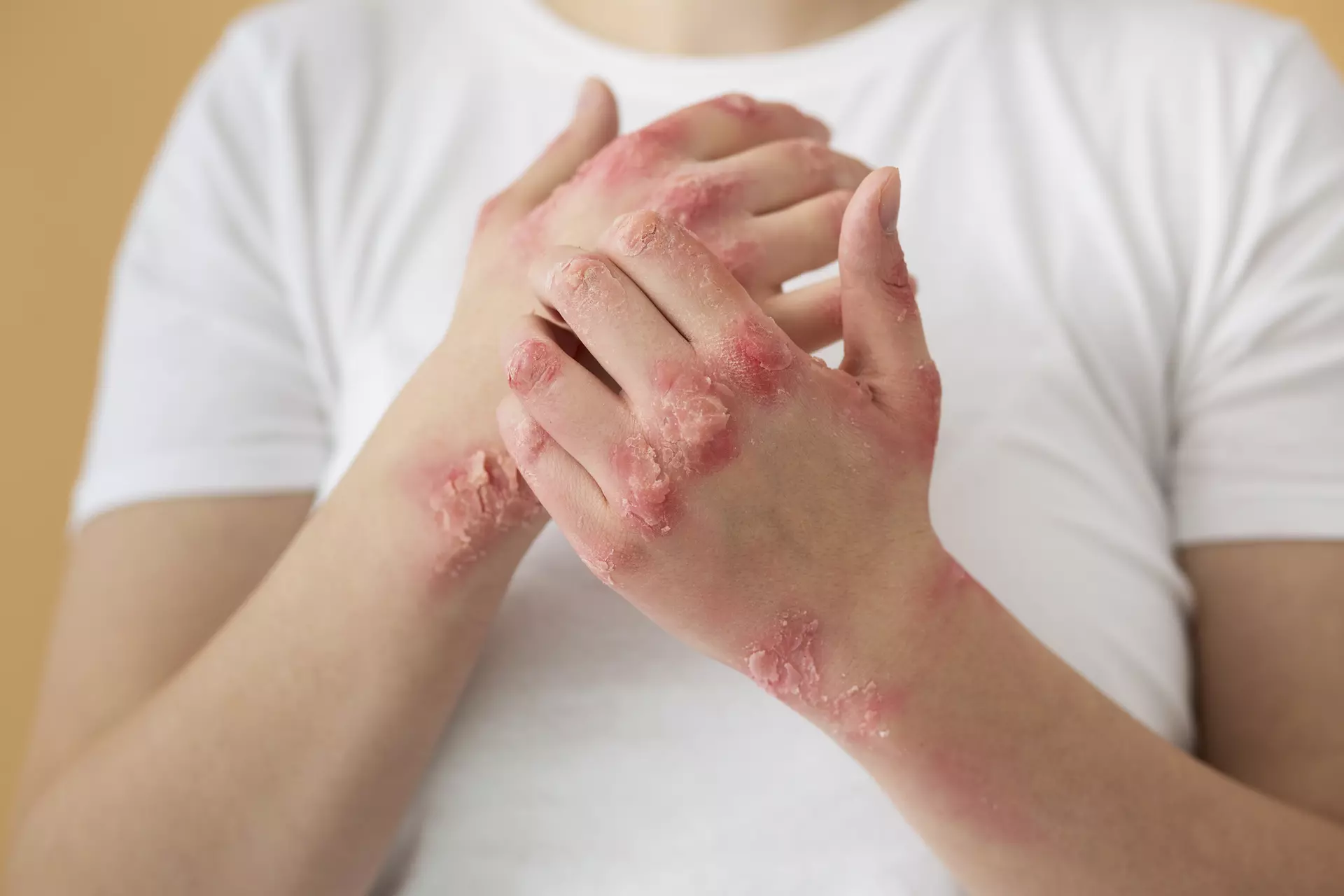
Atopic dermatitis — the most common form of eczema — is a chronic inflammatory skin condition driven by a combination of genetic predisposition, skin barrier dysfunction, and immune dysregulation. The skin loses its ability to retain moisture and maintain its barrier against environmental irritants and allergens, producing cycles of dryness, itching, and inflammation that vary in frequency and severity over time.
It affects roughly 10 to 20 percent of children and persists into adulthood in a significant portion. Adults can also develop it for the first time. Chronic eczema affects sleep, concentration, work, and quality of life in ways that are well-documented and frequently underappreciated — partly because patients adapt to living with it, and partly because there’s a cultural tendency to treat it as a minor inconvenience rather than a medical condition that merits proper management.
Diagnosis and classification
Atopic eczema typically presents as dry, itchy, inflamed patches. In infants and young children, it most commonly affects the cheeks, scalp, and extensor surfaces. In older children and adults, the pattern often shifts to the flexural areas — inside the elbows, behind the knees, around the wrists and ankles. Chronic disease produces lichenification: thickened, leathery skin from repeated scratching.
Contact dermatitis — a reaction to something the skin touches — can look similar and sometimes coexists with atopic eczema, complicating the picture. When standard treatment isn’t producing the expected response, patch testing to identify contact allergens is a useful diagnostic step. Dyshidrotic eczema presents specifically on the palms and soles as deep-seated, intensely itchy vesicles and requires its own management approach.
Treatment
Baseline management begins with the skin barrier. A good emollient — thick, fragrance-free, applied immediately after bathing — reduces transepidermal water loss and decreases the frequency and severity of flares. This sounds simple but is one of the most impactful interventions available, particularly in mild to moderate disease.
Topical corticosteroids remain the mainstay of flare management. Potency selection matters — using a low-potency steroid on thick plaque eczema on the trunk is inadequate, while using a high-potency steroid on the face or intertriginous areas risks skin atrophy. We prescribe the right potency for the location and severity and give clear guidance on frequency and duration of use.
Topical calcineurin inhibitors (tacrolimus, pimecrolimus) are non-steroidal options particularly useful for sensitive areas like the face and eyelids, where chronic corticosteroid use is problematic.
For moderate to severe atopic dermatitis not adequately controlled with topical therapy, dupilumab (Dupixent) has changed the treatment landscape. Dupilumab is a biologic that blocks the IL-4 and IL-13 pathways central to atopic eczema’s immune dysfunction. Clinical trials showed dramatic reductions in itch and inflammation in a large proportion of patients. For patients who have struggled with severe eczema for years without adequate control, it represents a genuinely meaningful advance.
Trigger identification and avoidance
Common triggers include harsh soaps and cleansers, fragranced products (one of the most common contact sensitizers), wool and synthetic fabrics, house dust mites, pet dander, low humidity, heat, and stress. Identifying the triggers most relevant to a specific patient is part of building an effective management plan. Not everyone has the same triggers, and assuming they do leads to advice that doesn’t help.
Frequently asked questions
Will my child’s eczema improve as they grow up?
Many children improve significantly through adolescence. Some continue to have periodic flares as adults. Good management during childhood reduces the burden and may reduce the likelihood of chronic adult disease. There is no reliable way to predict who will outgrow it.
I’ve been using over-the-counter hydrocortisone for years. Is that okay?
Over-the-counter hydrocortisone is low-potency and generally safe for short-term use, but it’s often not strong enough to adequately control moderate flares. Chronic use without guidance can lead to steroid dependence — the skin’s inflammation worsens when the steroid is stopped. If you’ve been relying on it for extended periods, a proper evaluation and treatment plan is worth having.
What is contact dermatitis and how is it different from eczema?
Contact dermatitis is a reaction triggered by direct skin contact with an irritant or allergen. It may look identical to atopic eczema but is localized to areas of contact and resolves when the trigger is removed. Patch testing identifies the specific allergens responsible. It’s one of the most frequently missed diagnoses in dermatology — patients treat it as eczema indefinitely without identifying the actual cause.