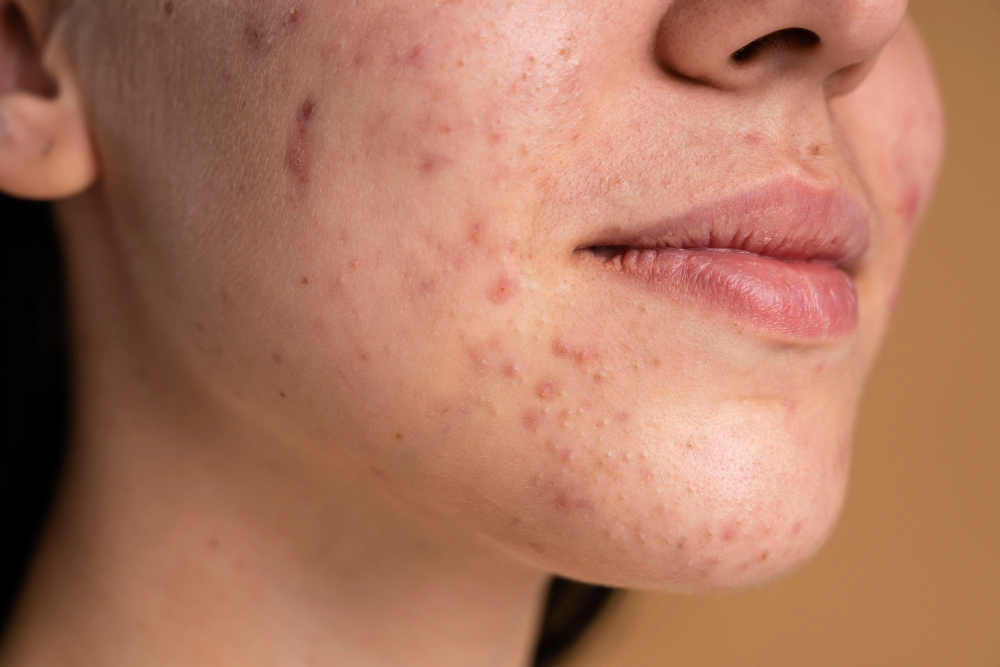
Acne is the most common skin condition in the United States. It’s also one of the most undertreated — not because effective treatments don’t exist, but because patients manage it themselves for years before seeing a dermatologist, cycling through over-the-counter products that address the symptom incompletely while the underlying drivers continue unchecked. By the time many patients come in, they’ve been dealing with it for a decade.
A dermatologist brings a more systematic approach and a meaningfully larger toolkit. More importantly, a dermatologist can distinguish between the different types of acne — which aren’t all the same, respond differently to different treatments, and require different approaches to prevent recurrence and scarring.
Types of acne and why the distinction matters
Comedonal acne — blackheads and whiteheads — results from follicles clogged with sebum and dead skin cells without significant inflammation. It responds best to retinoids, which normalize skin cell turnover, and is often worsened by heavy moisturizers or pore-blocking ingredients.
Inflammatory acne — papules and pustules — involves bacterial involvement (primarily Cutibacterium acnes) and an immune response. This responds to topical antimicrobials like benzoyl peroxide and clindamycin, oral antibiotics for more widespread disease, and retinoids as a backbone of treatment.
Nodular and cystic acne involves deeper, larger inflamed lesions that don’t resolve the way surface pustules do and carry a high risk of permanent scarring. This level of acne typically requires systemic treatment.
Hormonal acne — more common in adult women — tends to concentrate around the jawline and chin, flares with the menstrual cycle, and responds specifically to hormonal interventions like spironolactone or combination oral contraceptives rather than to conventional topical antibiotics.
The treatment ladder
Mild acne is typically addressed with combination topical therapy — a retinoid plus an antimicrobial agent — with attention to the skin’s barrier and the patient’s current skincare routine. Many over-the-counter products actively aggravate acne by occluding pores or disrupting the skin barrier, and eliminating them is part of treatment.
Moderate acne usually requires adding oral antibiotics in the short term — doxycycline or minocycline are most commonly used — alongside topical therapy. We use oral antibiotics for defined treatment courses rather than indefinitely, to minimize resistance.
Severe or treatment-resistant acne, or any acne producing significant scarring, is a strong indication for isotretinoin (Accutane). Isotretinoin is the most effective acne treatment available, producing long-term remission in the majority of patients who complete a course. It requires careful monitoring — baseline labs, monthly pregnancy testing for female patients of childbearing potential, regular follow-up — but for patients who’ve exhausted other options, the results are often transformative.
Adult hormonal acne in women is evaluated with a different framework, and spironolactone is often a highly effective option that bypasses the antibiotic resistance concerns associated with long-term oral antibiotic use.
Acne scarring
Scars are best addressed after active acne is fully controlled — treating scars while the acne continues is treating a wound while the injury is ongoing. Once acne is under control, options for scar treatment include topical retinoids for mild surface changes and in-office procedures for more significant scarring. We discuss what’s available and what’s realistic for the specific type and severity of scarring present.
Frequently asked questions
I’ve tried everything. Is there really anything different you can offer?
Probably, yes. If you’ve never been on isotretinoin, that’s the most likely meaningful upgrade for severe or chronic acne. If you’re a woman with hormonal acne that hasn’t responded to conventional treatment, spironolactone may be the answer. If what you’ve tried hasn’t worked, the question is usually whether the right diagnosis was made and whether the right class of treatment was used for that diagnosis — not whether more options exist.
How long before I see results?
Most prescription topical treatments show meaningful improvement at 8 to 12 weeks with consistent use. Oral antibiotics can produce visible improvement faster — sometimes within a few weeks. Isotretinoin typically takes two to three months before patients see substantial clearing, and some patients experience a brief worsening in the first few weeks. We set expectations accurately before starting any treatment.
Does diet cause acne?
The evidence is better than it used to be. High-glycemic foods and dairy — particularly skim milk — are associated with acne in observational studies. The effect size varies between individuals. Dietary modification can be one part of a comprehensive approach but is unlikely to be sufficient on its own for moderate to severe acne.
Can acne come back after isotretinoin?
It can, but most patients experience long-lasting improvement. Some require a second course, particularly if the first was completed at a lower cumulative dose. We discuss the specifics of treatment planning, including dosing and duration, when isotretinoin is being considered.