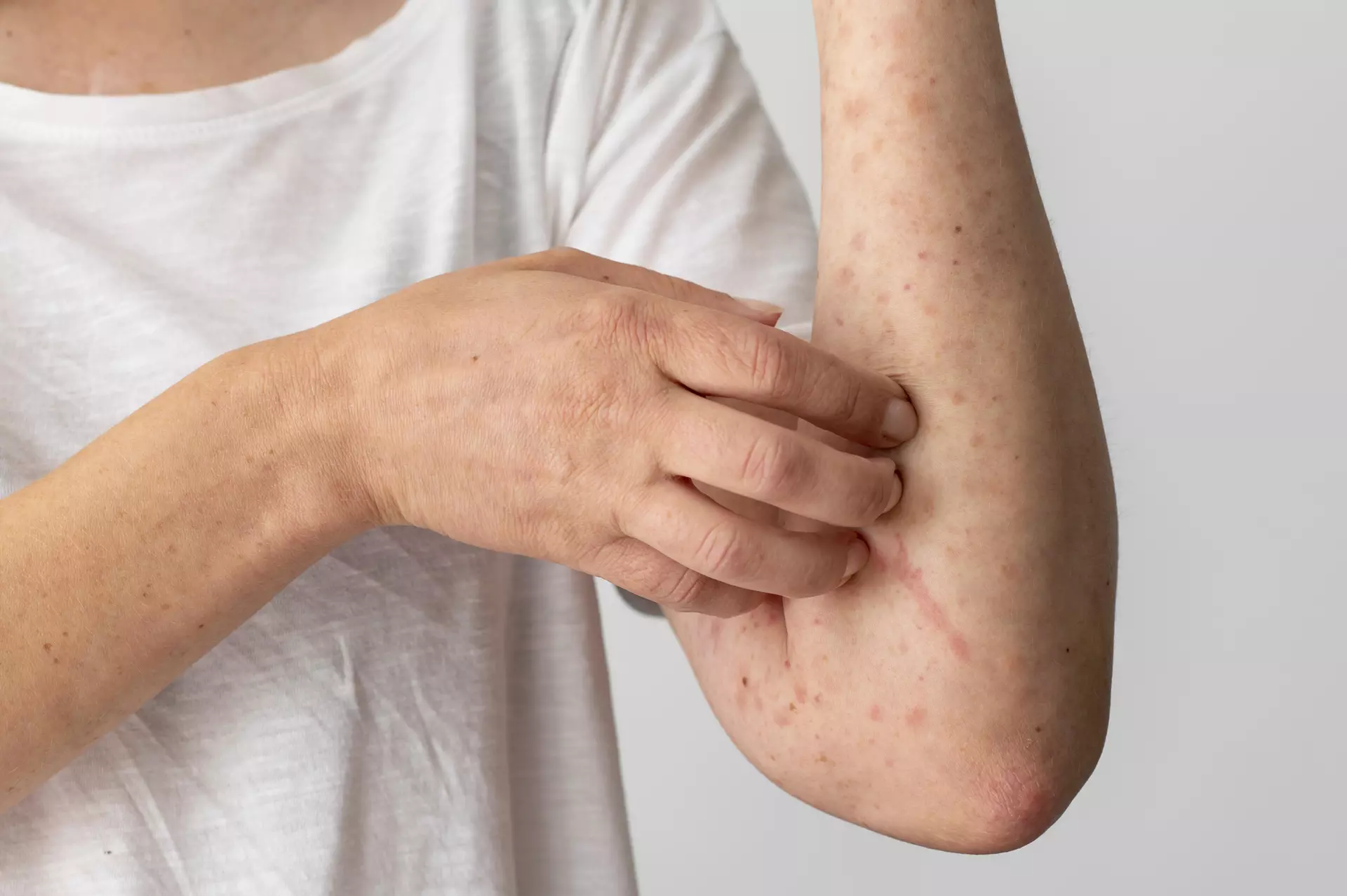
A rash is a symptom. What it means depends on where it is, what it looks like, how it developed, what was happening in the days before it appeared, and the patient’s broader medical context. The range of possibilities is large — from a straightforward contact reaction that resolves when the trigger is removed, to the cutaneous manifestation of a systemic illness that needs a very different workup.
Getting the diagnosis right is the work. Treating a rash empirically without a diagnosis sometimes works and sometimes makes things considerably worse. Applying a topical steroid to a fungal infection reduces the inflammation temporarily while allowing the fungal component to spread — the condition looks better briefly and then becomes significantly harder to manage. A viral rash treated with antibiotics is a course of antibiotics that doesn’t help and carries its own risks.
The diagnostic process
When you come in with a rash, we’re asking specific questions: Is it symmetric? Does it follow any particular anatomical distribution — dermatomal, photodistributed, linear, or confined to areas of contact with specific materials? Is it itchy, painful, or asymptomatic? Did it start as a different type of lesion and evolve? What were you exposed to recently — new products, medications, plants, animals, new environments? Are there any systemic symptoms — fever, joint pain, fatigue?
Most rashes can be diagnosed through careful clinical examination combined with history. Dermoscopy is useful for certain presentations. When the diagnosis isn’t clear clinically, a skin biopsy — sending tissue for histopathologic analysis — often resolves the ambiguity. Patch testing is the appropriate next step when contact dermatitis is suspected, identifying the specific allergen responsible.
Common presentations we evaluate and treat
Contact dermatitis from irritants or allergens is among the most common. New skincare products, laundry detergents, jewelry metals, rubber or latex, plants, and occupational exposures are frequent culprits. Allergic contact dermatitis often appears one to four days after exposure, not immediately — which is why patients frequently don’t connect the rash to its cause.
Fungal infections of the skin (tinea) present in characteristic patterns depending on location — tinea corporis (ringworm), tinea pedis (athlete’s foot), tinea cruris (jock itch), and tinea versicolor each have recognizable appearances that can be confirmed with KOH preparation when uncertain.
Drug reactions range from simple morbilliform eruptions, which are common and usually benign, to serious hypersensitivity reactions requiring urgent evaluation. Any new rash in someone who has recently started a new medication warrants attention.
Urticaria (hives) can be acute or chronic. Identifying the trigger in chronic urticaria is often challenging — many cases are idiopathic — but management of symptoms and evaluation for underlying causes is something we approach systematically.
Shingles (herpes zoster) has a characteristic dermatomal distribution and burning quality that is usually recognizable. It is particularly important to treat early — antivirals within 72 hours of rash onset significantly reduce duration and the risk of post-herpetic neuralgia, a chronic pain condition that can persist for months or years after the rash resolves.
Frequently asked questions
Should I stop using all my skincare products before coming in?
If you suspect a product reaction, stop using anything new. Don’t apply anything new to the area. Bring everything you’ve applied to the area in the two weeks before the rash appeared — the ingredient lists are often more useful than the product names themselves.
When is a rash an emergency?
Rashes that spread rapidly, involve the face or mucous membranes (inside the mouth, eyes, or genitalia), are accompanied by fever, or develop in someone who has recently started a new medication warrant prompt evaluation. If you have any doubt about severity, err toward seeking evaluation quickly rather than waiting.