Skin cancer is the most common cancer diagnosis in the United States — more common than all other cancers combined. In Florida, with its year-round sun and culture built around outdoor activity, that statistic has particular weight for the patients we see.
A suspicious spot doesn’t mean the outcome is serious. It means it needs to be evaluated by someone who knows what they’re looking at, promptly and accurately, so that treatment — if needed — happens at a stage where the options are most effective and the interventions are least disruptive.
The three types we most commonly diagnose and treat
Basal cell carcinoma (BCC) is the most common skin cancer, accounting for roughly 80 percent of cases. It typically appears as a pearly or translucent bump, a flat scar-like lesion, or a pink growth, most often on the head, neck, and hands. BCCs rarely metastasize but can grow deeply into surrounding tissue if neglected, making early treatment important for both medical and cosmetic outcomes.
Squamous cell carcinoma (SCC) is the second most common type and may appear as a rough, scaly patch, a firm red nodule, or a sore that doesn’t heal. SCCs carry a higher risk of local spread and, in certain anatomical locations or in immunocompromised patients, a meaningful risk of metastasis. Early treatment significantly reduces that risk.
Melanoma is less common but more dangerous. It can arise in an existing mole or appear as a new dark or multicolored lesion. Melanoma’s tendency to spread to lymph nodes and distant organs makes early detection the single most important factor in determining outcomes. Thin melanomas caught early have excellent survival rates; advanced melanoma is considerably more difficult to treat.
How we diagnose skin cancer
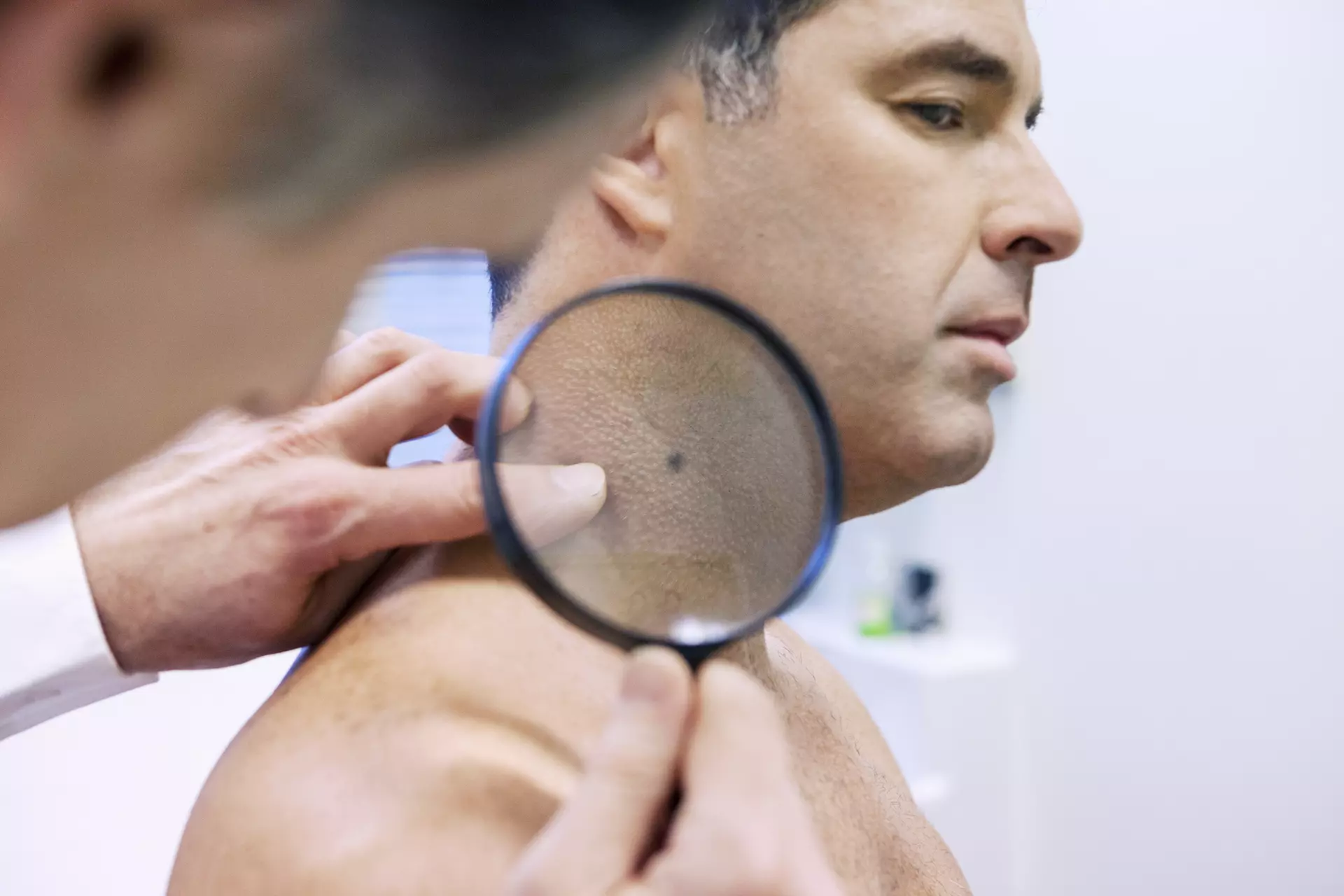
Diagnosis begins with a clinical examination. We assess the lesion visually and with dermoscopy. For lesions with concerning features, a biopsy is the definitive next step. The area is numbed with a small injection of local anesthetic, then a sample is removed and sent to a dermatopathologist. The technique varies — shave biopsy, punch biopsy, or excisional biopsy — depending on the lesion’s characteristics and location. Results typically return within one to two weeks.
When results return, we review them with you directly. We explain what was found, what type and subtype of cancer it is, what the grade and depth mean in practical terms, and what treatment options are available. You leave understanding your situation, not trying to decode a report on your own.
Non-surgical treatment options
Not all skin cancers require surgery. For superficial BCCs in appropriate locations, topical treatments like imiquimod or fluorouracil, and photodynamic therapy, can produce high cure rates with good cosmetic outcomes and no incision. We discuss these options honestly — including their cure rates compared to surgical options — so patients can make informed decisions. When surgical treatment is the right approach, see the Skin Cancer Treatment (Surgical) section for detailed information.
Frequently asked questions
How is a biopsy different from full removal?
A biopsy removes a sample for diagnostic purposes. Depending on size and technique it may remove the whole visible lesion, but it’s not planned as a definitive treatment. Full removal with appropriate margins is a separate procedure planned once the diagnosis is confirmed.
What happens if the biopsy shows cancer?
We contact you to review the results and discuss the treatment plan. We’ll tell you specifically how urgent the situation is and why, and what the options are. Some cancers warrant prompt treatment; others allow time to plan carefully.
Can skin cancer spread?
BCCs very rarely spread beyond the skin. SCCs occasionally spread to regional lymph nodes, particularly in high-risk locations or in immunocompromised patients. Melanoma has significant potential to spread and is why melanoma staging and treatment planning is more involved. The risk for each type is discussed specifically in the context of your diagnosis.
How can I reduce my risk going forward?
Broad-spectrum SPF 30 or higher daily, protective clothing, avoiding tanning beds, and regular annual skin exams. These don’t eliminate risk but meaningfully reduce it. If you’ve already had one skin cancer, annual exams are particularly important.